
Training / Muscle growth / Recovery
Heavy Duty vs. High-Volume Training: What Works for Natural Lifters?
Mike Mentzer, Dorian Yates, and the science of building muscle without anabolic drugs.
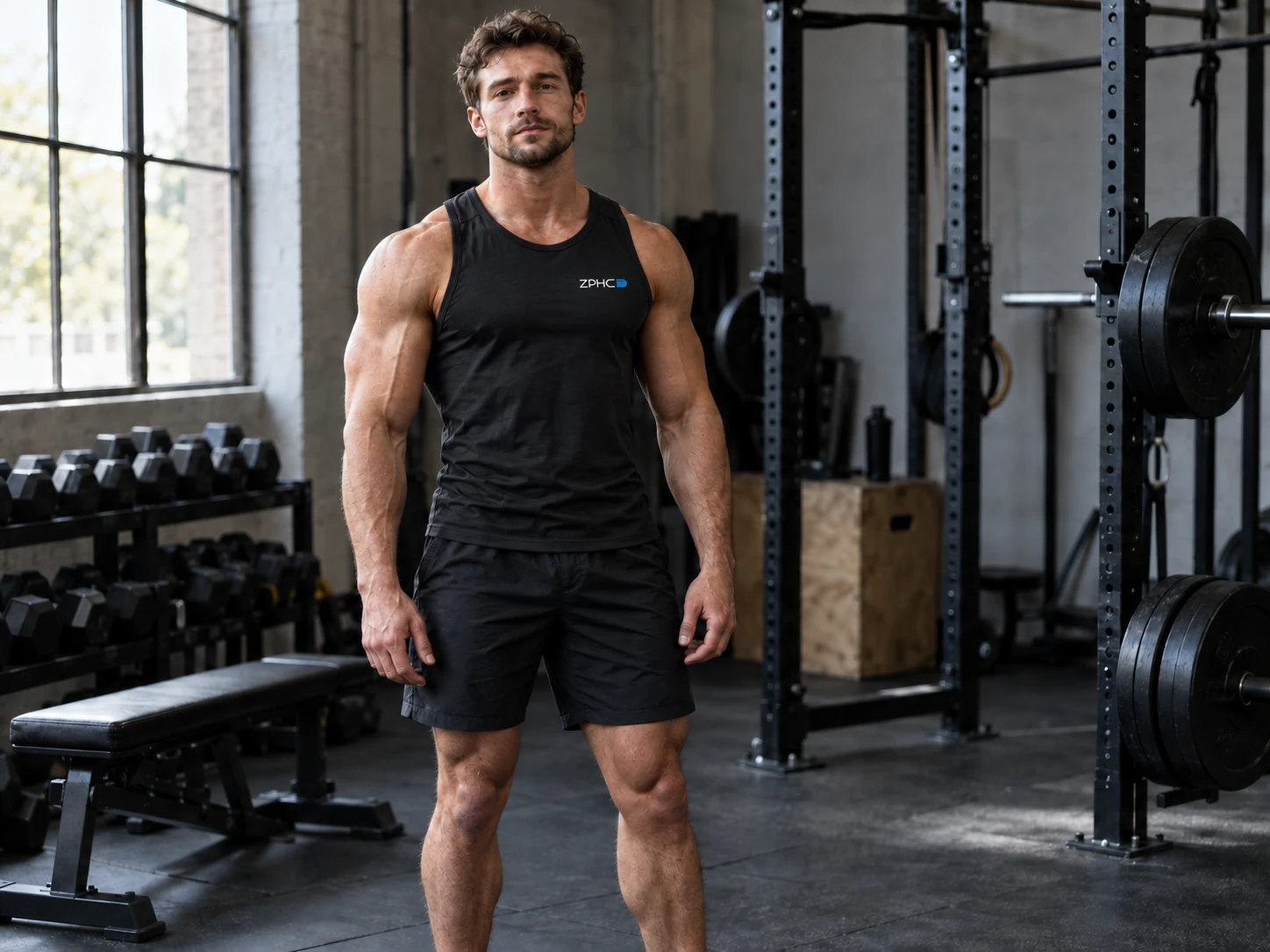
What Mentzer, Yates, and higher-volume bodybuilding actually represent
Mike Mentzer’s Heavy Duty emphasized a small amount of exceptionally hard work, measurable progression, and sufficient recovery. His later consolidation approaches became more minimalist, with longer recovery intervals. No single routine represents every phase of his teaching. [1]
Dorian Yates’s famous “one working set” generally meant one maximal set per exercise, after preparatory sets—not one total set per muscle. Several exercises for the same body part still produce several working sets. Warm-ups are separate from that count. [1]

Classic higher-volume bodybuilding, represented by advanced programs associated with Arnold Schwarzenegger, used more exercises and working sets. That increases both training opportunities and recovery demands. A champion’s physique does not prove the workload is best for someone else. [1]
Compare volume, effort, frequency, and progression—not personalities. Natural lifters can borrow a professional’s split without copying every set or beyond-failure technique. [1]

How a hard set becomes more muscle
Resistance exercise loads muscle fibers. Cells translate that loading into biochemical signals—a process called mechanotransduction—that influence protein production and remodeling. Signaling involving mTORC1 helps regulate protein production, but an acute signal does not prove superior long-term growth. [1,3]
Across repeated training and recovery periods, muscle proteins are rebuilt and accumulated, allowing existing fibers to enlarge. Food supplies energy and building materials. However, a temporary increase in muscle-protein synthesis does not equal new muscle: some synthesis supports repair, particularly after unfamiliar exercise. [1,4]

“Damage the muscle so it rebuilds bigger” is therefore incomplete. Soreness can decline with repeated exposure while training remains productive. A pump reflects temporary fluid changes, not instant muscle construction. Neither is a reliable growth score. [1,4]
Use a comfortable, repeatable range of motion and judge progress across time. Strength also improves through skill and coordination, so heavier lifts are not a precise measurement of muscle growth. [1]

What anabolic drugs change—and what they do not establish
Anabolic-androgenic drugs change the hormonal environment and muscle-building response through mechanisms involving androgen receptors and protein turnover. They do more than simply allow somebody to spend longer in the gym. [1]
In Bhasin and colleagues’ ten-week experiment in healthy men, testosterone exposure above normal physiological levels increased fat-free mass even without prescribed training. Testosterone plus training produced the largest changes. But fat-free mass is not identical to new contractile muscle, and a short experiment does not establish lifelong outcomes. [1,5]

That experiment did not establish optimal sets, frequency, or effort by drug status. It cannot justify claims that enhanced lifters recover twice as quickly or need twice the workload. Greater muscle growth also does not mean proportionally stronger tendons or protection from cardiovascular harm. [1,5,9,10]
Do not derive your program from an enhanced physique. Equally, drug-free training does not automatically require the opposite routine. Evaluate the actual workload and your response. [1]
Do you need to reach muscular failure?
Muscular failure means you cannot complete the lifting phase of another repetition through the prescribed range despite maximal effort. Technical failure means another repetition would require abandoning the intended technique. Discomfort alone is neither. [1]

Repetitions in reserve, or RIR, is an estimate of how many repetitions remain before failure. Finishing at 2 RIR means approximately two remain. Accuracy varies with experience and the exercise. [1]
In an eight-week study of trained adults, stopping lower-body sets around 1–2 RIR produced similar quadriceps growth to failure training, with less immediate performance loss. This challenges the “failure switch,” although it does not establish identical outcomes for every exercise or program. [1,6]

Finish most working sets with 1–3 repetitions in reserve. Beginners can initially use 2–3 while learning. Experienced trainees may use 0–1 selectively on stable machine or isolation exercises. Very-low-volume programs may place greater importance on performing the few prescribed sets with exceptionally high effort. These are starting choices, not universal cutoffs. [1]
Forced repetitions and assisted work beyond failure are not necessary starting tools. In free-weight exercises, safe termination, rack safeties, and competent spotting matter more than proving you can attempt one more repetition. [1]

How many sets, and how often?
A single hard set can stimulate growth. Multiple productive sets generally produce more hypertrophy on average, with progressively smaller returns from additional work. This makes low-volume training a legitimate time-efficient option, not a proven universal maximum for muscle growth. [1,2]
Practical starting ranges are 4–8 direct hard sets per major muscle weekly for beginners, and 6–12 for many intermediates. These are a synthesis of the evidence, not biological thresholds or independent quotas for every muscle. [1]

Count warm-ups separately and recognize overlap: presses involve the triceps, while pulling exercises involve the biceps. Direct arm sets are not their only weekly work. [1]
About two exposures per muscle weekly is a useful starting structure. One or three can also work. When weekly volume is matched, frequency’s independent effect appears comparatively small. Four gym visits on an upper/lower split usually mean two primary exposures per muscle—not four. [1,7]
Additional days off help when they solve a recovery problem. They are not automatically anabolic. Neither soreness nor the timing of an acute protein-synthesis response provides a reliable countdown to the next workout. [1]

A practical two-day muscle-building program
This example prioritizes manageable volume. It is not an original Mentzer or Yates routine or a program tested as a complete package. Train Monday and Thursday, or two similarly spaced days. [1]
| Monday | Thursday |
|---|---|
| Leg press: 2 × 6–10 | Split squat: 2 × 8–12 per leg |
| Chest press: 2 × 6–10 | Incline dumbbell press: 2 × 8–12 |
| Lat pulldown: 2 × 8–12 | Chest-supported row: 2 × 8–12 |
| Romanian deadlift: 2 × 8–12 | Leg curl: 2 × 10–15 |
| Lateral raise: 1 × 12–20 | Lateral raise: 1 × 12–20 |
| Biceps curl: 1 × 10–15 | Triceps extension: 1 × 10–15 |
| Calf raise: 2 × 8–15 | Calf raise: 2 × 10–15 |
These are working sets. Add progressively heavier, nonexhausting warm-ups before demanding lifts. Initially use 2–3 RIR. Rest around 2–3 minutes or longer for demanding compound sets and 1–2 minutes or longer for smaller isolation movements. Preserve performance rather than rushing. [1]

This provides four direct weekly sets each for chest, back, quadriceps, and hamstrings, plus accessories and overlap. A split-squat set completed on both legs counts as one set per side’s target muscles, not two. [1]
Add repetitions before adding weight. For an exercise prescribed as 2 × 6–10, increase the load by a small amount after both sets reach ten repetitions at the intended RIR with consistent technique. Do not count shorter movements or extra assistance as progression. [1]
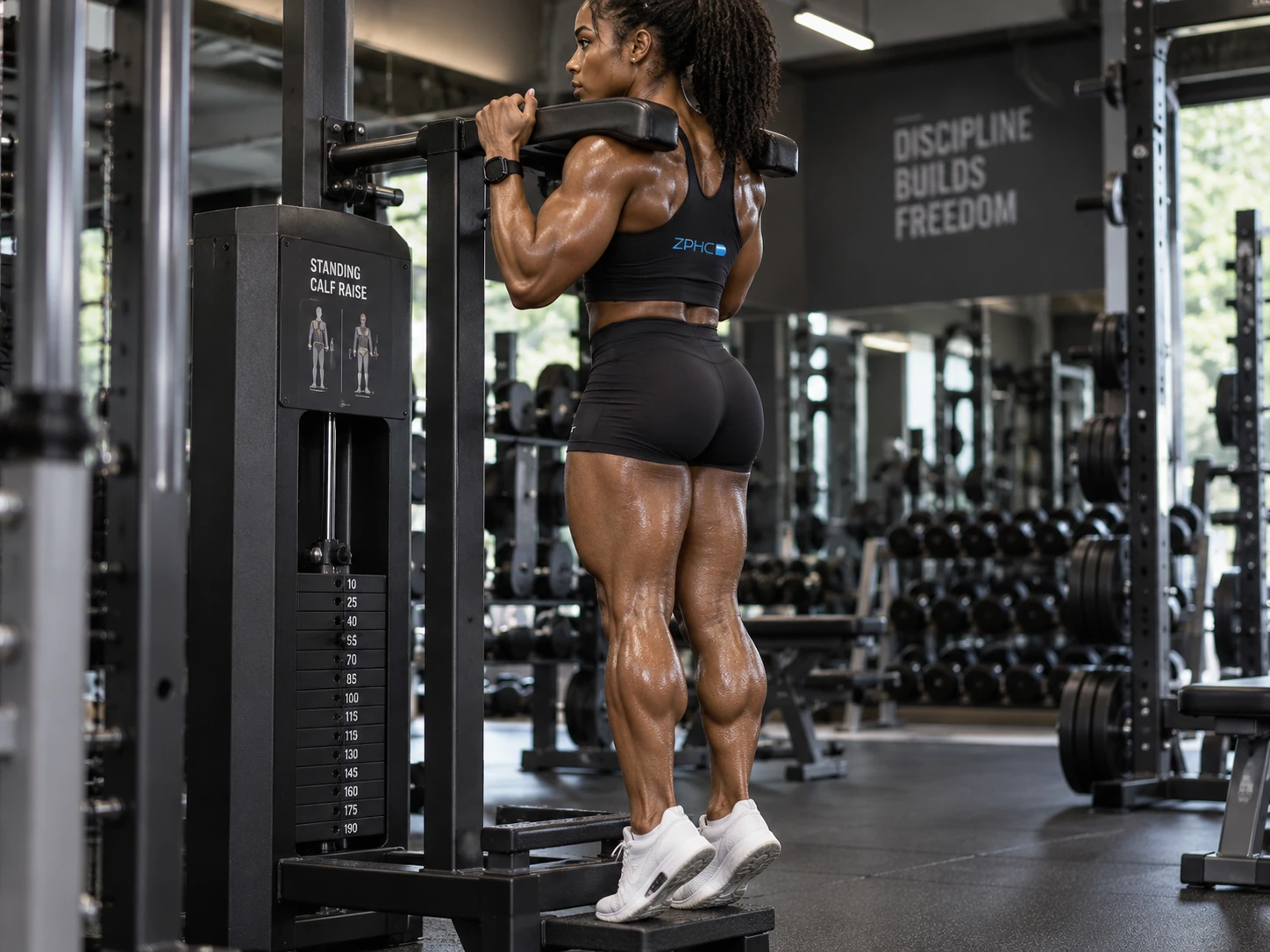
What to change when progress stalls
Log loads, repetitions, sets, and RIR. Compare trends, not isolated workouts. Standardized measurements or photographs help assess size changes, but hydration, body fat, and measurement error complicate interpretation. [1]
Before adding work, check consistency, technique, effort, inter-set rest, food, sleep, and competing activity. Around 1.6 grams of protein per kilogram of body weight daily is a useful target for healthy resistance trainees; medical conditions may require individualized advice. Supplements cannot replace adequate training and recovery. [1,8]

If a target muscle remains stagnant while execution and recovery are good, add a small amount of direct work. If comparable performance repeatedly declines, reduce some sets or failure exposure. When late-session quality collapses, distribute the existing weekly work rather than automatically adding more. Change one major variable at a time. [1]
Stop rather than push through sharp pain, chest pain, fainting, or severe unexplained breathlessness, and seek medical assessment. Persistent joint or tendon problems also deserve qualified attention. [1]

Heavy Duty’s useful lesson is purposeful effort, not doing as little as possible. Volume research supports additional productive work, not endless sets. Train hard enough, repeat enough quality work, recover, and adjust according to progress—not allegiance to a system. [1]
References and editorial basis
The article is adapted from the supplied ZPHC research dossier. References 2–10 are selected studies discussed in that dossier; their inclusion does not represent a new independent literature review. The sample program and starting ranges are practical syntheses, not a trial-validated package. Exact historical routine tables and direct quotations are intentionally not reproduced.
- ZPHC Article #2 Research Dossier: Heavy Duty vs. High-Volume Training for Natural Lifters. Supplied research manuscript; research cut-off September 18, 2026. Source file: deep-research-report.md. Relevant sections: historical systems; mechanisms of hypertrophy; failure, volume, frequency, recovery, and pharmacology; practical programming; troubleshooting.
- Pelland JC, et al. The Resistance Training Dose Response: Meta-Regressions Exploring the Effects of Weekly Volume and Frequency on Muscle Hypertrophy and Strength Gains. Sports Medicine. Online publication 2025; issue 2026. DOI: 10.1007/s40279-025-02344-w.
- Wackerhage H, et al. Stimuli and sensors that initiate skeletal muscle hypertrophy following resistance exercise. Journal of Applied Physiology. 2019;126(1):30–43. DOI: 10.1152/japplphysiol.00685.2018.
- Damas F, et al. Resistance training-induced changes in integrated myofibrillar protein synthesis are related to hypertrophy only after attenuation of muscle damage. The Journal of Physiology. 2016;594:5209–5222. DOI: 10.1113/JP272472.
- Bhasin S, et al. The Effects of Supraphysiologic Doses of Testosterone on Muscle Size and Strength in Normal Men. New England Journal of Medicine. 1996;335(1):1–7. DOI: 10.1056/NEJM199607043350101.
- Refalo MC, et al. Similar muscle hypertrophy following eight weeks of resistance training to momentary muscular failure or with repetitions-in-reserve in resistance-trained individuals. Journal of Sports Sciences. 2024. DOI: 10.1080/02640414.2024.2321021.
- Schoenfeld BJ, et al. How many times per week should a muscle be trained to maximize muscle hypertrophy? A systematic review and meta-analysis of studies examining the effects of resistance training frequency. Journal of Sports Sciences. 2019. DOI: 10.1080/02640414.2018.1555906.
- Morton RW, et al. A systematic review, meta-analysis and meta-regression of the effect of protein supplementation on resistance training-induced gains in muscle mass and strength in healthy adults. British Journal of Sports Medicine. 2018;52:376–384. DOI: 10.1136/bjsports-2017-097608. A later correction is noted in the source dossier. Correction: DOI: 10.1136/bjsports-2017-097608corr1.
- Kanayama G, et al. Ruptured Tendons in Anabolic-Androgenic Steroid Users: A Cross-Sectional Cohort Study. American Journal of Sports Medicine. 2015. PMID: 26362436.
- Baggish AL, et al. Long-term anabolic-androgenic steroid use is associated with left ventricular dysfunction. Circulation: Heart Failure. 2010. PMID: 20424234.